Two prospective customers can want the same service and arrive with different questions. A shop owner choosing a design studio might want to see if it can give the shop a recognizable look. A marketing manager hiring the same studio might want to see how it handled approvals on a similar project. The studio can make its work easier for both buyers to evaluate by changing the first example each sees.
Start with a shared offer, write down each buyer’s first question, and try an introduction that puts the relevant evidence close to the claim. You can test two introductions in a pair of short documents before editing the site.
Write down what both audiences can count on
Use a sentence that describes what you deliver. A design studio might write, “We design visual identities and prepare files your team can use across print and web.” Below it, list the project facts that apply to both audiences: the deliverables, who did the work, and any limits on the service. Keep these in one place so that a change to the offer carries through to each introduction.
Keep a shared set of work samples, too. Give each case a short description of the task, a design or delivery decision, and evidence you can show, such as a style guide excerpt or photos of the work in use. Record which pieces are yours to share. A project can support several claims when it shows the evidence for each. The same label design could show the way a brand looks across a shelf and how the studio made files for three package sizes.
Start with the question the reader arrives with
Ask a recent buyer to tell you how the last similar project started. Listen for what happened just before they looked for help, what they checked first, and what would have made them stop considering a supplier. Check inquiry emails or briefs for the same language. The GOV.UK Service Manual’s user needs guidance describes how to use earlier evidence alongside interviews and observation to learn what people are trying to do.
Write the question as the buyer might say it. “Can you make the packaging easy to recognize from the aisle?” gives you a project to show. “Small businesses value creativity” gives you a broad guess about a category. Two companies of the same size may need different evidence if they’re buying at different times. A shop preparing its first launch and a shop replacing packaging in continuous production face different constraints.
Choose a lead example for each question
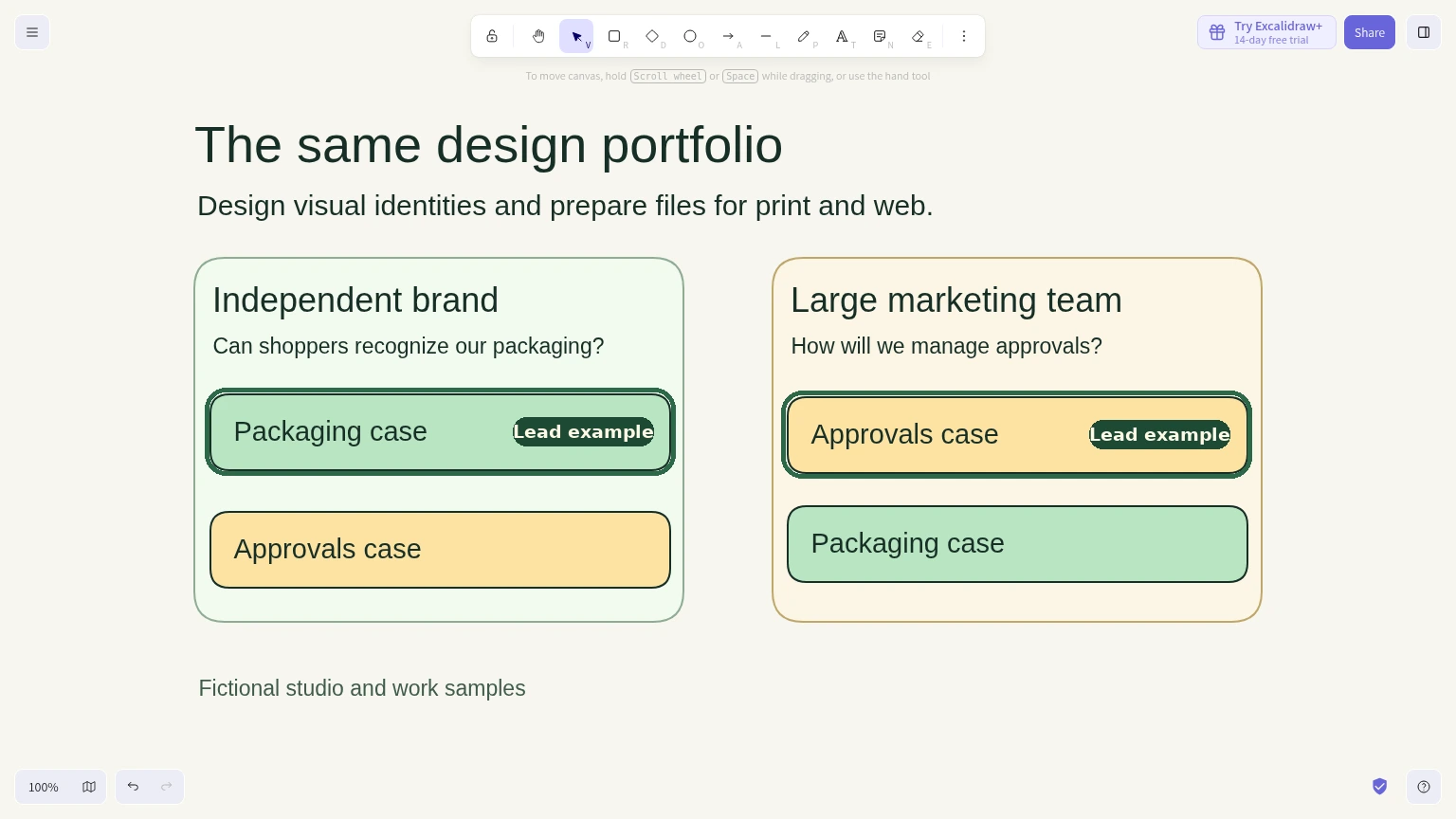
In this fictional studio example, both introductions promise a visual identity and files for print and web. The independent brand sees a packaging case first. It includes a shelf mockup and the change that made the range easier to recognize. The large team sees a rollout case first. It shows how reviewers approved the template, where edits were recorded, and how the studio handed over the files. Both introductions can link to the same project library and carry the same invitation to discuss a brief.
A freelance copywriter facing this choice could lead with voice work when a creative director wants a distinctive campaign. Another introduction could lead with a project that shows how the writer kept a consistent voice across an agency’s client reviews. A side project, such as a poem, can sit in the shared portfolio with a label that tells the reader what it demonstrates.
The same approach works for a software company selling one product to two buyers. A team lead may want to see the weekly task they can stop doing by hand. An IT lead may ask who controls access and how data leaves the tool. Put the workflow beside the first claim and the actual controls beside the second. Have both introductions draw from the same current description of the product.
Decide how much to split
- Keep a shared page when readers ask the same opening question. Add labels or links to help people find the samples they came for.
- Try two introductions when readers need different evidence for the same offer. Use a short deck, a direct link or two openings in a prototype. Keep the cases and offer details in the same source.
- Build separate pages when readers arrive through different routes or need different information before they can take the next step. For example, a shop can book a short call while a large team needs a supplier packet and a named point of contact. Give each page enough context to stand alone and assign someone to update the claims both pages share.
If the work itself differs, write down those differences before changing the language. A fixed-scope identity project and a six-month rollout have different deliverables and timelines. A reader needs to see which service they can request.
Check what a reader takes away
Show each draft to a few people who’ve had a brief like the one you’re writing for. Let them read it at their own pace. Ask what they’d contact you for, which example gave them enough evidence to consider it, and what they’d need to see before taking the next step. The GOV.UK guide to moderated usability testing explains how to give someone a realistic task and observe where they hesitate before explaining the design.
Keep the invitation route and buyer situation beside each response. If a prospect can repeat the offer but points to the wrong proof, try moving the relevant case earlier. If both groups understand the offer and find the same sample persuasive, try a shared opening. If a group keeps asking for a different deliverable, check whether you provide it before promising it in a headline. A few conversations can catch unclear language and misplaced evidence. You need a larger, comparable sample to estimate how much a change affects inquiries across an audience.