
Positioning gives people a clear context for a brand: who it serves, the problem it helps solve, the alternatives people consider, and the value it can credibly offer. Someone needs the authority to choose that direction and help the team put it into use.
A practical starting arrangement is one person who runs the work, one person who can approve the decision, and contributors who bring evidence from customers and the business. The right approver depends on the scope. A founder may approve a change in target market. A marketing lead may already have authority to refine a product explanation within an agreed strategy.
This guide provides a process for deciding who owns which choice, resolving disagreements, and carrying an agreed position into campaigns and everyday conversations. The examples are hypothetical. The process is BrandTofu's practical recommendation, informed by the primary sources linked throughout. Sources were checked on October 15, 2026.
Define the decision before assigning its owner
“We need to fix our positioning” leaves several possible decisions inside one sentence. Your team might need to choose its intended audience, the category buyers use to understand the offer, or the specific value its communications will emphasize. It might also need to improve a headline that expresses an existing choice.
Write a decision question that includes the audience, offer, scope, and consequence. For example:
“Should our scheduling product focus its next awareness campaign on independent repair shops that manage appointments by phone?”
That is a decision someone can investigate. The answer affects research, creative work, distribution, and sales examples. The approver needs authority over that scope.
A second question might be: “Which explanation helps those shop owners understand our existing appointment reminder feature?” That smaller choice may sit within the marketing team's established remit. A product change or a promise about future capabilities introduces additional authority and evidence requirements.
April Dunford's introduction to positioning explains how alternatives, capabilities, customer value, customer fit, and category relate to each other. Use it to identify which part of your position is actually under discussion. A change to the audience can change which capabilities and comparisons deserve emphasis.
Give the work a driver and an approver
A driver keeps a decision moving: they define the question, gather evidence, invite the relevant people, and prepare a recommendation. An approver has authority to make the final call within the stated scope. One person can fill both roles in a small business, with the responsibilities written down separately.
These role names come from Atlassian's DACI decision framework. DACI also names contributors, who provide knowledge and recommendations, and people who need to be informed of the outcome. The framework calls for a single approver. Our positioning process applies that division to a specific marketing decision.
The arrangement needs agreement from the people named. A marketer writing “CEO approves” in a document has created a proposal for responsibility. Confirm the mandate, the decision date, and the resources before treating it as settled.
For a small software company, a product marketing lead could drive a positioning review. Sales brings recurring buyer objections. Customer Success brings evidence about use after purchase. Product explains current capabilities and constraints. The founder approves a change in audience focus because it affects the company's commercial direction.
For a larger business, a product-line leader may hold that authority within the line's agreed strategy. A company-wide category change may require an executive sponsor. Brand, product, regional, and commercial responsibilities can overlap, so record where each decision stops and where escalation begins.
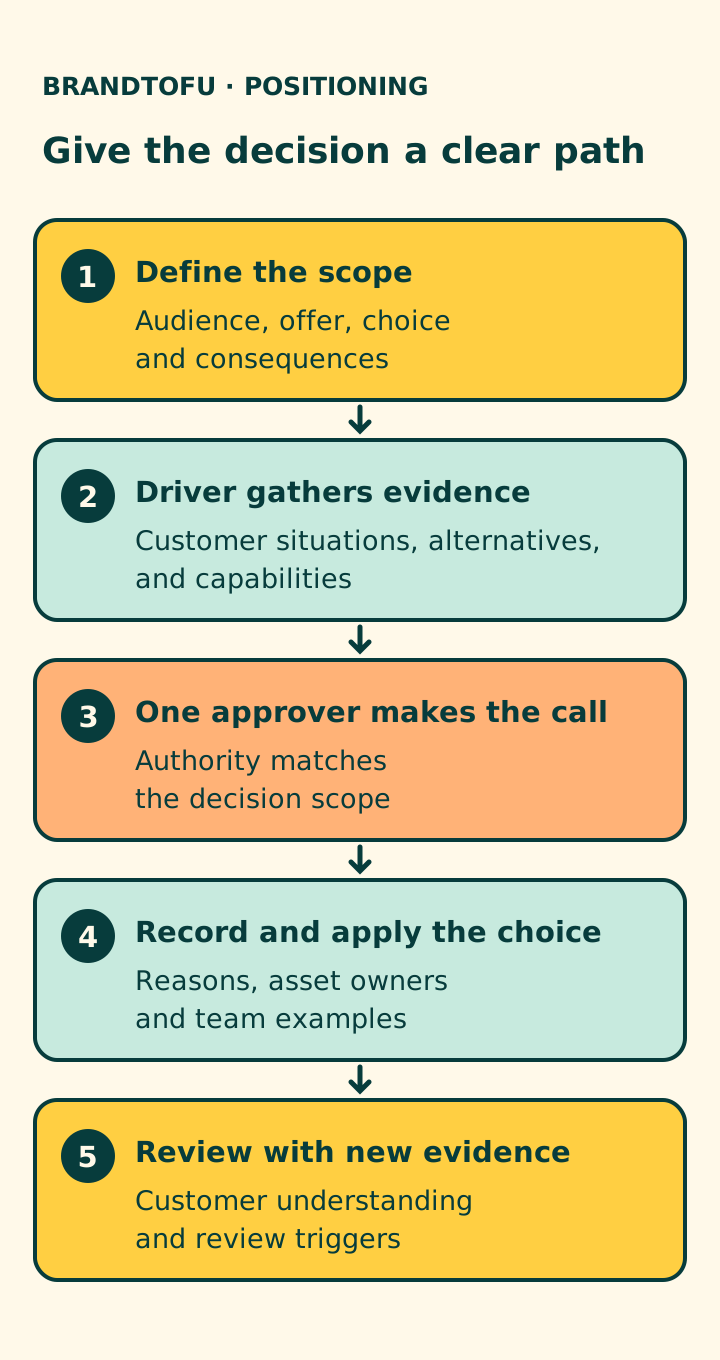
Gather evidence that can change the choice
Ask contributors for observations tied to the decision. “Buyers love flexibility” is difficult to evaluate. A note describing the buyer, their situation, the alternative they considered, and the capability they needed gives the team something concrete to discuss.
Build a compact evidence pack:
- Customer context: what the intended audience is trying to accomplish and how it handles the problem today.
- Alternatives: the products, services, manual processes, or existing arrangements people actually consider.
- Capabilities: what the offer can deliver now and what evidence supports its claims.
- Value: how those capabilities help the intended audience in the situations you are targeting.
- Uncertainty: gaps in the evidence, conflicting observations, and assumptions that need a test.
Keep observations and interpretations in separate fields. A customer saying they spend Friday afternoons calling appointment reminders is an observation. “Reducing reminder calls should lead our message” is an interpretation your team can examine.
The GOV.UK guide to in-depth interviews provides useful research practice: prepare discussion topics, use open questions, and explore concrete experiences. Applied here, ask someone to walk through their last relevant decision. Avoid asking them to choose your company's internal strategy for you.
For the repair-shop example, the team could investigate how owners manage bookings, who makes software decisions, which missed appointments create problems, and what they currently do about them. A few interviews can reveal issues to explore. Their findings describe those conversations; they do not establish how common each issue is across the whole market.
Diagnose why the stories differ
Different answers from colleagues can have several causes. Check the pattern before choosing the response.
An onboarding gap: newer colleagues may have received older materials or incomplete explanations. Compare the sources they were given with the current decision record. Ask them to explain a realistic customer scenario, then repair the training and examples if needed.
Different customer situations: Sales may be describing a first purchase while Customer Success is explaining an established customer's workflow. Ask whether the underlying audience, value, and capabilities agree. Different examples can be useful when each fits the same position.
A stale asset: a presentation, partner brief, or website page may carry an earlier version. Identify where it is still in circulation and assign someone to update it.
An unresolved strategic choice: experienced colleagues may disagree about the customer the business intends to serve or the alternatives it plans to compete against. Record the competing choices and the evidence for each. Bring that decision to the person with authority over its consequences.
In the public discussion that prompted this guide, a participant asked who could resolve disagreements uncovered by an internal positioning check. It is a useful example of the handoff from diagnosis to decision. A survey can reveal differences. Your organization still needs an agreed route for acting on them.
Treat job tenure and department as clues for investigation. A pattern in a small internal survey can suggest follow-up questions; it cannot by itself establish the cause of disagreement.
Run a decision meeting with a visible finish
Circulate the decision question, options, evidence, constraints, and proposed recommendation before the meeting. Give contributors time to point out factual errors or missing consequences.
During the discussion, distinguish a concern about evidence from a preference about wording. “We have no evidence that repair shops buy this feature” needs investigation. “I prefer a punchier adjective” belongs in the later expression of the choice.
The driver should make unresolved concerns easy to see. The approver can then choose an option, request a specific missing piece of evidence, or authorize a bounded test. If evidence is missing, record who will get it and when the decision will return. A meeting ending with a general request for more research leaves everyone guessing about the next step.
Use a short decision record:
- Question and scope: the choice being made and the areas it affects.
- Driver and approver: the named people and the authority they have agreed.
- Options and evidence: the alternatives considered, observations, and limits.
- Choice and reason: the selected direction and the tradeoffs accepted.
- Implementation: assets to update, owners, and a practical sequence.
- Review trigger: evidence or a business change that would justify reopening it.
For a hypothetical neighborhood bakery, the owner might approve a campaign aimed at local offices ordering breakfast for meetings. The marketing coordinator drives the work, while the kitchen lead confirms which orders the team can reliably fulfill. The decision record sets the service area and ordering conditions. The campaign's promises can then match the bakery's actual capacity.
Carry the choice into the work
Translate the position into a small set of examples people can use. Show a homepage opening, a short verbal explanation, a social post, and a response to a common buyer question. Explain which parts carry the shared meaning and where teams can adapt for context.
Give each affected asset an owner. For the scheduling product, the website, sales introduction, partner materials, and support explanation might all need changes. Sequence them so people can find the current version and understand when the earlier materials should stop circulating.
A founder doing the work alone can keep this lightweight: one decision page, a list of affected assets, and a scheduled review. A multi-product company may need a shared corporate description plus separate product decisions. A regional team may adapt examples and language within an agreed boundary. Write down which changes require another decision.
An external agency can research, facilitate, and recommend. The client still needs to identify the person who can approve the resulting business choices. Agree that person and the scope before the project begins.
Check customer understanding and team use
Test an explanation with people from the intended audience. Let them read or hear it, then ask them to describe who the offer is for, what it helps with, and what they would compare it with. Record misunderstandings in their words. Use those observations to improve the explanation and identify questions for further research.
Internally, ask colleagues to apply the position to a customer example. Check where old descriptions remain in use. A correct recitation of a sentence gives you one observation; using the position accurately in a real task gives you another.
Review the decision when the product, audience, alternatives, or supporting evidence changes. Set a practical review date as well, so ownership survives the first workshop. Keep the history visible: what changed, who approved it, and why.
A clear first step is to choose one live disagreement and complete the first two lines of the decision record. State the question and confirm the driver and approver. Those people can then agree what evidence is needed and how the team will reach a usable choice.
Assign decision rolesAtlassian explains the driver, approver, contributor and informed responsibilities used in this guide.↗ Understand the positioning choicesDunford explains how customer alternatives, capabilities, value, customer fit and category connect.↗ Prepare useful interviewsGOV.UK provides practical guidance for conversations grounded in people's experiences.↗